Two blog posts in a row about Coltrane, eh? This expansion on his influence was inspired by the 100th anniversary of his birthday, which was yesterday as I write this. Happy birthday Maestro, you truly are the GOAT.
-0-0-0-0-0-0-0-0-0-0-
Like so many British musicians, the beginnings of my relationship with jazz were quite deliberate. It wasn’t music that we were regularly exposed to in the general course of things. My middle school and high school had no jazz band, not even a big band. School music was orchestra or nothing. Jazz occasionally cropped up on TV, sometimes in the most unlikely places – Bruce Forsyth’s Count Basie-esque piano playing, Roy Castle’s prodigious trumpet skills. But we were reading about electric jazz musicians in music magazines. We were hearing talk of these amazing players, and in the context of that reading, we were introduced to ‘the greats’. We learned the names of the legends and then the vagueries of record availability took over.
I was fortunate enough to have the opportunity in my mid-teens to sit in regularly with a ‘New Orleans’ jazz band – Pete Roughead, a local trumpeter, was an obsessive regarding what he saw as the true New Orleans music. NOT, he would reiterate, Dixie, not the derivative, watered down stuff. The real shit. Louis Armstrong’s Hot Five and Hot Seven, George Lewis’ New Orleans Stompers. In that context I learned how to play walking bass, to outline the chords. No chromaticism allowed, but that foundation served me well in the years to come.
And the first electric jazz gig I ever saw was a line-up that years later I would understand was the absolute cream of what British electric jazz had to offer in the 80s – Jim Mullen, Mornington Lockett, Ian Thomas and an absolute bass giant who later became a good friend, Lawrence Cottle on bass. In a hotel room in Berwick On Tweed. No doubt funded by an Art Council Touring Grant, via Jazz Services.
As an avid record buyer, I started to look for jazz that made sense to me. And the first two jazz records I bought were Pat Metheny’s Question & Answer and Steve Berry’s trio – I had a real thing for trios. Around the same time, a friend’s mum gave me her collection of bebop best-of albums. Parker, Miles, Dizzie, Sonny Stitt… a whole stack of these collections of 1940s legends. I really wish I still had them. They were fascinating and a key part of me starting to get an ear for the music. But it still wasn’t MY music.
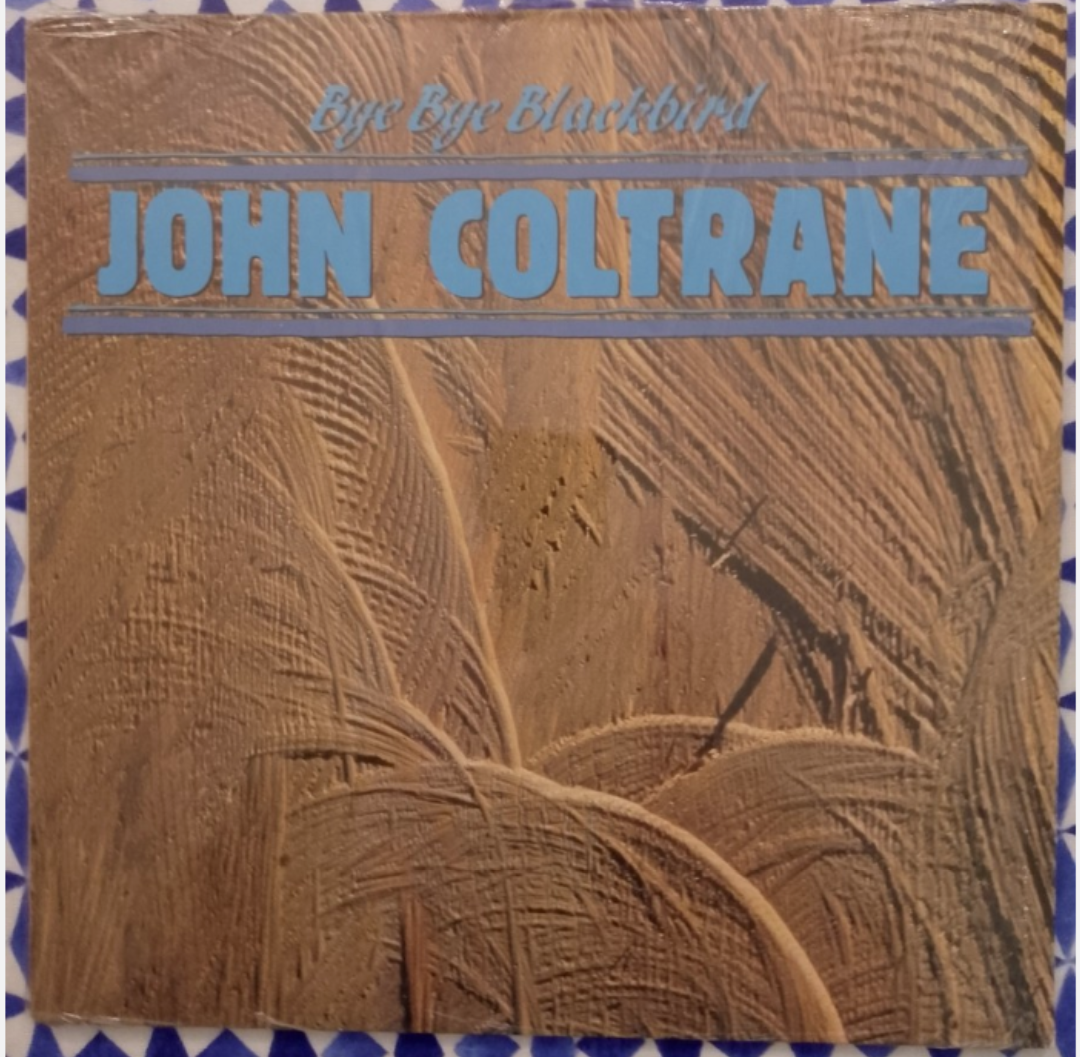 On the day of my (spectacularly failed) audition for Salford University in 1991, I went record shopping in a street market. I bought three albums – Bill Evans ‘Autumn Leaves’ (which was, I think, outtakes from Sunday At The Village Vanguard), Mingus Plays Duke, and Bye Bye Blackbird live in Europe by John Coltrane.
While the bebop records had fascinated me, I didn’t really connect with what I was hearing in terms of wanting to play it. But Scott Lafaro’s bass playing on Autumn Leaves absolutely captivated me, and the Coltrane record brought collective improv into an emotional space that compelled me. It opened a door.
Something about Coltrane’s searching, curious, open-ended approach to melodic exploration felt completely natural to me. It didn’t feel polished, refined, like multiple takes or too much rehearsal had happened. It felt like he was pouring his soul into the music and the musicians were hanging on for the ride.
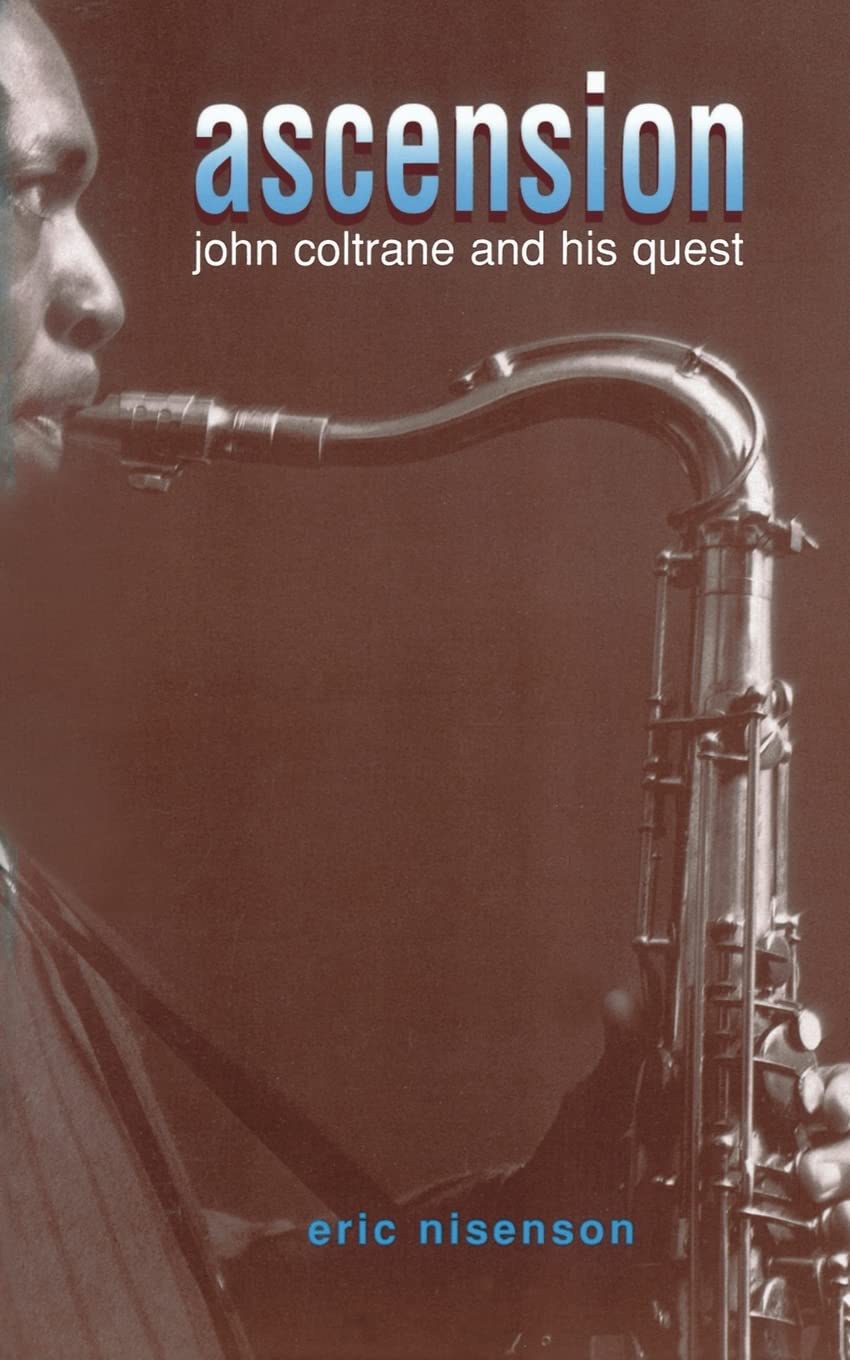 As my interest in making music got more and more focused on signal processing, on sound design, I found myself drawn away from a lot of acoustic jazz, save for a handful of Miles records and that Coltrane album, until I bought Eric Nisenson’s Coltrane biography, ‘Ascension: John Coltrane and His Quest’. This wasn’t a dispassionate factual biography. It was a love letter to the music and the creative genius that made it. It plotted Coltrane’s music to the philosophical and spiritual questions he was searching out at the time. I seem to remember it describing the album Crescent as ‘one of those things that makes life worth living’ (Crescent remains one of my all time favourite ‘Trane records) and in the course of reading it I spent somewhere north of £120 buying each album as it came up in each chapter. Working through from Blue Train to Lush Life, Giant Steps, My Favourite Things to the albums with Ellington and Johnny Hartman, Africa/Brass, Live at Birdland, Coltrane, Crescent, Love Supreme, Stellar Regions, Interstellar Space…
And it was in this that I discovered an approach that has stuck with me ever since, that shapes every single thing I’ve done. While so many of my peers have spent decades digging into the harmonic insights in Giant Steps and the unmatched technical skill of that period of densely written, hugely energetic fast playing that perhaps peaked with Russian Lullaby, through the lens of Nisenson’s book I saw a path that took Coltrane from that relatively brief period of dense writing to one where the compositions were almost sketch-like, shapes and scratches of melody, simple structures that acted as a catalyst and a canvas for the unparalleled complexity and subtlety of improvisation. Hearing the band barely hanging on on the recording of Giant Steps left me largely cold – in spite of my deep love of the actual melody. But listening to Crescent and A Love Supreme, or Alabama, or Stellar Regions, hearing each musician bring their own voice, their interpretation their harmonic world to the table, hearing Elvin bend time and space, Jimmy Garrison manage to play some of the most incredible double bass playing in the history of jazz whilst being so locked in that he ended up being the most overlooked member of the classic quartet. Hearing McCoy take the harmonic innovations of Bill Evans and Miles in the late 50s and build a new world for Coltrane’s improvisations to exist in. It was that sense that the songs were a vehicle for all of that that shaped me. It was the fact that the composition could be almost anything and they would make it magic. My Favourite Things wasn’t a ‘standard’, it was a pop song that they quoted one bit of before branching out into an extended modal improv that bore no resemblance to the changes. It was a vehicle. The familiarity drew people in, gave the performance a hook and a shape, but was 2% of what made it magical.
Inside that world, Coltrane explored every aspect of his being through his horn. Pushing the technical possibilities of the instrument so far that the Tenor sax still hasn’t come out from under his shadow. Perhaps the most enduring kingdom in all of music. ‘Trane still reigns supreme. He explored music from around the globe, he experimented with line-up changes, doubling up instruments just as Ornette Coleman had – these weren’t gimmicks, they were attempts to find the context for a musical connection with the infinite.
But – and this is perhaps the part that I draw on even more than the simplicity of the frameworks for improv – they were all one, or at most two day sessions. These era – even century – defining records were recorded in one or two takes on a single day. Often with other sessions the day before or after. Their significance being a combination of otherworldly music and the attachment of story, narrative, context and marketing to particular recordings. The great lost album, Both Directions At Once, was recorded one day before the incredible album with singer Johnny Hartman. Wildly different recordings, adjacent sessions. A Love Supreme was recorded in two days, including a whole version of Acknowledgement with Archie Shepp on sax, and Art Davis on second bass. The sanctity of the quartet was an editing decision made later. Coltrane was just trying shit out, constantly.
The stakes were never higher or lower than playing the best music they had to bring on the day. These weren’t albums that were sweated over for years. The vast majority of Coltrane’s musical world was unrecorded, vast numbers of shows where ideas came and went, some discarded, some forgotten. Whole eras of his development that just wouldn’t fit on recording devices. There’s talk of him having played two hour versions of a single tune on some gigs. No recording device existed at the time that could capture that, and no medium to release it would come along for several decades. So what we have captured are snapshots of an improvised life. Singular studio and live performances, that exist in the scarcity of the availability of tape and mics and recording devices, set up in such a way that the ferocity of Elvin’s drums and Coltrane’s sax didn’t just overload all the preamps to the point where the document was unusable and was therefor recorded over with whatever the engineer needed to do next. No-one was anticipating tools to clean up terrible recordings.
The history of improvised music is told through the lens of editors, of A&R people, engineers and release schedules, its aesthetics are shaped by the sometimes fraught relationship between the ephemerality and situationality of improvised musics and the varying degrees of austerity and sterility in recording studios. If the greatest performance of A Love Supreme was a show that no-one was recording, we’ll never know. If a mistake transformed a composition one night and it became the new version, we’ll never know.
So, in short, I owe a vast, vast amount of what I see as possible in music, of what I see as the purpose, the journey, the search for a voice and for meaning, for connection with transcendence, to Coltrane and his influence. Or rather, to what I’ve inferred from the documentary record. From the recordings, the interviews, the books, the stories. From that I was able to find the unparalleled beauty of the recordings, the inspiration in the journey and the progression, and the sense that his quest was one that I could codify into a journey that made sense to me. Not in some lofty sense, but in a deeply pragmatic need for forward motion:
Make music every day, capture as much of it as possible, create space for miracles to occur, invite other musicians to do whatever it is that they do best, hold lightly to the role of composer or instigator, iterate and get as much of the good stuff into the world as you can. Then do it again. And again. And again. Nostalgia is comfort for other people once you’re dead. Keep moving forward.