[preamble – this is an emerging line of thought for my PhD, so I wrote this down as is today by way of getting the thoughts out… make of it what you will… It’s a pretty long read… 🙂 ]
The traditional economic arrangement within the music industries throughout the pre-digital ‘age of mechanical reproduction‘ was for record labels to pay (as little as possible) for the rights to record music onto a physical format, promote the music via radio, TV and magazines, and then sell that product via distribution to shops where the public bought it. The role of the artist was as both originator of the music (though the idea of artist-composer was, in pop music, a relatively late development) and the object of the marketing/promotion, where a version of the artist was presented to the public, often as a heroic figure, a figure of aspiration or of sexual desire, and the music associated with that image.
The role of record producer was to mediate between the creative work of writing and performing songs (after an A&R person had helped connect the artist to the desired song) and the demands and constraints of the market, as well as the immovable requirements of the format – a vinyl record, be it a 78, 7″ single or 12″ LP, could only hold a specific length of music, and so studio production was as much as anything else an exercise in enforced brevity, particularly for makers of music that relied on improvisation. Jazz performers at the end of the 50s and into the 1960s were known for stretching out live, and playing single tunes that would extend beyond the constraints of one side of a 12″ LP (first introduced in 1948)…
CD extended that limit to 74 minutes, and with the advent of digital-only releases, the limitations on durational audio works became looser and related to file size upload limits for particular platforms (Bandcamp, for example, only allows up to 600Mb files, which for a 16bit 44.1Khz FLAC file is approx two hours in length) or the endurance of the audience… Which neatly brings us to the audience’s role in production. Stuart Hall in his seminal work on mass media reception and semiotics Encoding And Decoding In The Television Discourse, outlines the concept of the audience reception of a production being part of the production cycle, in that TV as a commercial format (or one with a public service broadcast remit like the BBC) is deeply influenced in its production decisions by the ways in which an audience has received similar work, by broader trends in TV viewing, and by projections based on other social and cultural observations about changes in behaviour.
In music, this historically led to structural orthodoxies in pop music, especially in songs that were designed as ‘singles’ and therefor focused on acquiring an audience through radio and TV exposure. From the length of the song to a set of assumptions about what the introduction should be, or when the chorus should arrive – as well as all the more recent discussions around the loudness war – we have a varying set of arrangement and production constraints that have influenced music makers for the best part of a century. This is a trend that continues into the digital age, with changes in the model of production for music works targeted specifically at the economic and attention-based affordances of streaming services.
So, what happens when you remove yourself from some of those constraints? A shift in constraints happened to some degree with the emergence of the LP as THE dominant format rather than the single – bands and artists started to produce works whose constraint was the length of music that would comfortably fit on one side of a record, or multiples of that (progressive rock albums such as Yes’ Tales From Topographic Oceans revelled in the perceived opulence of recording a four track suite over a double album, each song lasting an entire side – as a young prog fan in the 80s, this was the pinnacle of the anti-commercial gesturing of progressive rock’s positioning as the antithesis of ‘pop’ music (despite it reaching number one in the UK album charts).) This coincided with a bunch of other changes in radio (in the UK, John Peel brought to BBC Radio 1 a wholly unconventional approach to what was considered good radio programming), in studio techniques (multitrack recording and more extensive editing made it possible for artists to do far more complex work by layering themselves multiple times, rather than just playing with a more-or-less live band set-up for the full 20+ minutes) and in listening patterns (Yamaha introduced ‘hifi’ speakers in the late 60s and the trend grew through the 70s for more pristine listening equipment in homes, before the cassette revolution changed listening again into the 80s)
The mechanisms for shifting the focus (in relation to commercial purpose, target audience or cultural context) of creating musical artefacts, whether physical or digital, are now broader than at any time in history. As much as we’re being told that the old industry is ‘dying’ there are still major record labels, still a machinery in place for the production and marketing of music and its makers in an evolved but recognisable version of the model built in the 50s and 60s. There are still bands of mostly older white men who define themselves as other by following the production conventions of those 70s progressive rock experimentations (such an interesting development for ‘progressive’ to be a term of comfort for those seeking a nostalgic experience within known and safe idiomatic parameters…) and there are still ‘audiophile’ listeners who consider the extreme fidelity of a recording as a value factor in whether something is worth listening to (and buying).
But there has also been an explosion in the development of community-based music production possibilities. Again, these are the extensions of existing models of production – independent record production has existed for as long as record production has been a thing, with artists making their own product to sell, and local labels forming around scenes as an entrepreneurial character saw an opportunity to make some money or at least build a sustainable community around local music making. With the advent of cassette, entire global networks of tape traders built social and creative capital for artists with no resources for distribution, particularly in the worlds of the ‘jam band’ scene in the US (where completists traded live tapes) and in the nascent 80s metal scene, where ‘zines played an utterly pivotal role in getting the word out about geographically localised scenes in places such as Brazil, Scandinavia, Florida and The Bay Area.
The primary novel affordances brought to these practices in the digital age are the ability to replicate the recordings with no loss of fidelity and at zero marginal cost (tape trading resulted in perpetual degradation of the original recording, and relied on an injection of capital at every stage as tapes were purchased and sent through the mail with photocopied artwork and information), and the enhanced capacity for the artists to be the originators of these recordings, and thus leverage both financial and social capital from those works, whether they are studio or live recordings. The tools for recording have become orders of magnitude cheaper in relation to equivalent production quality over the last 30 years, with the capability to produce works that are aesthetically indistinguishable from expensive commercial recording studio productions at ‘bedroom’ level.
One of the most interesting affordances this creates is for the mediation process between artist and audience to become diminished to the point where it is largely experientially invisible as ‘commercial exploitation infrastructure’, beyond the activities it makes possible. External mediating infrastructure is still required by means of web hosting for the recordings/media, communications technology that exact a price in either money (a paid email list host for example) or the extraction of data from our transactions and our (artist + audience) exposure to advertising (eg Facebook, Twitter), the use of those same advertising tools and their algorithmic infrastructure to tell the story of our art and reach new audiences that solely relying on word of mouth won’t reach. Add to that the need for physical devices – computers and mobile devices on which to listen to the recordings and to communicate with audiences – and for communication between audience members.
That the technological means for receiving the music are already in place for many of our audience members removes one barrier to their engagement with the music and the community around it, but does create a situation in which the ways that attention is transacted around music are now competing directly with all the other attention-acquiring activities that those same devices are capable of, from social media activity (reading/posting/media interaction), video watching, gaming, gambling, private conversation, media production and the management of many areas of our personal lives such a finances and health. That my CD player was never needed to be repurposed as a conversation tool or to check my bank balance made it a far more stable environment for the experiencing of music, once I had oriented myself to it with the intention of committing time to listening to music. I also in that instance was only able to choose from the music I owned, or had borrowed and was currently in my possession, rather than it being juxtaposed within the same listening device with the potential to seek out an unimaginably huge amount of music from across the entire history of recorded audio.
So what does all this mean for my initial question about the audience as producer? Well, those roles associated with a record producer – the person with the technical skills (or who would hire a person with those skills) and who connects the project to the commercial context by making aesthetic suggestions regarding the degree to which the work would ‘fit’ – are heavily modified by an environment in which the audience
- are in direct contact with the artist,
- are potentially party to the process of making the recordings,
- are present at the gigs where live recordings are made, and
- are – in the case of subscription models for pre-paying for the work – already the ‘funders’ of the work, creating an economic cushion for the time needed to work on the music.
So many of the various roles that a record producer might have exclusively occupied in the age when music making and music discovery/sales were connected by the machinery of a label are now possible to be distributed between artist and audience, making it a distinct consideration that the artist might conspicuously include the audience in the process of making the work.
This invitation to be a part of the work might be as forward as allowing them to democratically choose the songs – the first artist I saw experiment with this was American bassist Seth Horan, who ran a pre-pay option for his album Clang And Chime, released eventually in 2009, and uploaded a large number of demo recordings of songs inviting the project’s backers, referring to them explicitly as producers, to choose the ones that went on the album – and thanks to my habit of archiving everything, I’ve just found one of his emails to his mailing list about it, from December 2008 –
“Since this past July, I’ve written 20 songs, recorded the first-draft versions, and sent them to a group of mailing list members who invested in this new album; they became my Producers, and have been providing valuable feedback in determining which songs are going to make it on to the album, and how to make those songs that DO make it as good as they can be. It has been awesome, awful, intense, funny, and candid, and the result is that I have been held to some surprisingly exacting standards.”
Alternatively, the audience inclusion may be a more general invitation to offer comment/support/conversation around the making of work, or organising meet-ups for listeners to connect with the artists, and through that more flattened hierarchical relationship, invite the audience who might consider themselves friends to comment on the work and express preference for particular activities.
The history of record production is littered with legendary stories of artists making work that labels hated, and these were very often self-produced (though historically it seems more rare for an artist to self-engineer the projects, so some level of quality control in the process was professionally mediated external to the band themselves), the tension existing over the perceived commercial value of those records (apparently Talk Talk went so far as to ban EMI representatives from the studio while spending a year – and an untold amount of money – recording Spirit Of Eden – a record the label hated, but which has become one of the most celebrated and influential records in of the last 40 years…). And tensions can still arise between artists and audience-producers, as any number of missed deadlines for crowdfunded projects via Pledge Music or Kickstarter will demonstrate.
In my case, the audience as producer mechanism is one that involves influence going both ways – I’m hugely grateful for the patronage, friendship, commentary, suggestions and conversation with my Bandcamp subscribers – and I quite often discover new music through that that influences my music-making – and in return, I invite them into a much more involved conversation about the value of a decommoditised process for releasing recordings, framing it more as an episodic, documentary project with each “album” building into a bigger story, rather than being an atomised product with a budget and a commercial placement. The amount paid by subscribers doesn’t change based on the amount I make, so there are times when I have to consider the real possibility of them feeling overwhelmed by the volume of music I might release at any one time if I happen to be in a really productive stage, and then their feedback becomes a significant factor in how and when I decide what to release (along with my own interpretation of the aggregate listener stats I get from Bandcamp, where I can see which albums have been most downloaded and most listened to in the app across a given time period, so can make some deductions about the likelihood that engagement has tailed off when I’ve put out too much music at one time).
So the audience mitigate volume of work, they feed into the direction I might pursue in that I’m consciously responsive (as well as occasionally being conspicuously antagonistic) to their preferences as expressed in the subscriber discussion area, but also more apt to provide additional narrative/contextual support for ideas that I feel the creative desire to pursue but for which there appears to be less existing enthusiasm! They also show up at gigs, and we get to talk about things before and after the show. There are even some who on occasion send me (unsolicited!) more money because they feel that the subscription cost doesn’t reflect the degree of value they get from the work. That’s a pretty extraordinary position to be in.
As an artist, I feel both a commitment to follow my ‘muse’ and a need to acknowledge that the idea of ‘creative freedom’ is mostly a bogus myth and the big concern is what particular set of directives we hook our wagon up to, be they commercial, cultural, historical, community-based, academic…
There are loads of ways we can interpret the quality and direction of our own musical output, but making myself to some degree accountable and available to the people who are willing to put money and attention behind music – as well as performing the emotional labour of being conspicuously supportive and attentive to the production of that work – including paying an annual subscription fee for work that doesn’t yet exist, feels like a far more meaningful expression of those things than I would perhaps find with a label and the whims of someone’s sense of my music’s commercial value…? The label/artist/audience divide is nowhere near as clear-cut in the age when performing those roles requires so much less access to manufacturing equipment or companies, far fewer logistical considerations revolving around the distribution of plastics to far flung corners of the world, and many labels actually function as a structured extension of this idea of audience as producer, many originating with people who were frustrated that the musicians who made the music they love were unable to carry on doing it within a system perceived as venal and anti-art. That positioning for a label, that of patronage and an art-first aesthetic has significant cross over experientially with the audience as producer notion, but ultimately relies way more heavily on the opinions of a much smaller number of people – often one person – than the shifting and evolving community that may afford an artist a level of perceived economic headroom to experiment further, inviting the existing audience on that journey, and perhaps marketing the subscription to people assumed to be more in tune with the changes in direction… For me as an artist whose stylistic frame is a dialectical exchange between having a very highly developed style and vocabulary but a commitment to exploring how it can be expressed across a wide range of idiomatic contexts, the affordances of the audience as producer notion are rich and rewarding. I’ve yet to hit on the limits of it creatively, in that I’ve never recorded something that I loved but felt was unlikely to be received well by my subscriber base… I’ll update this post should that ever happen 🙂
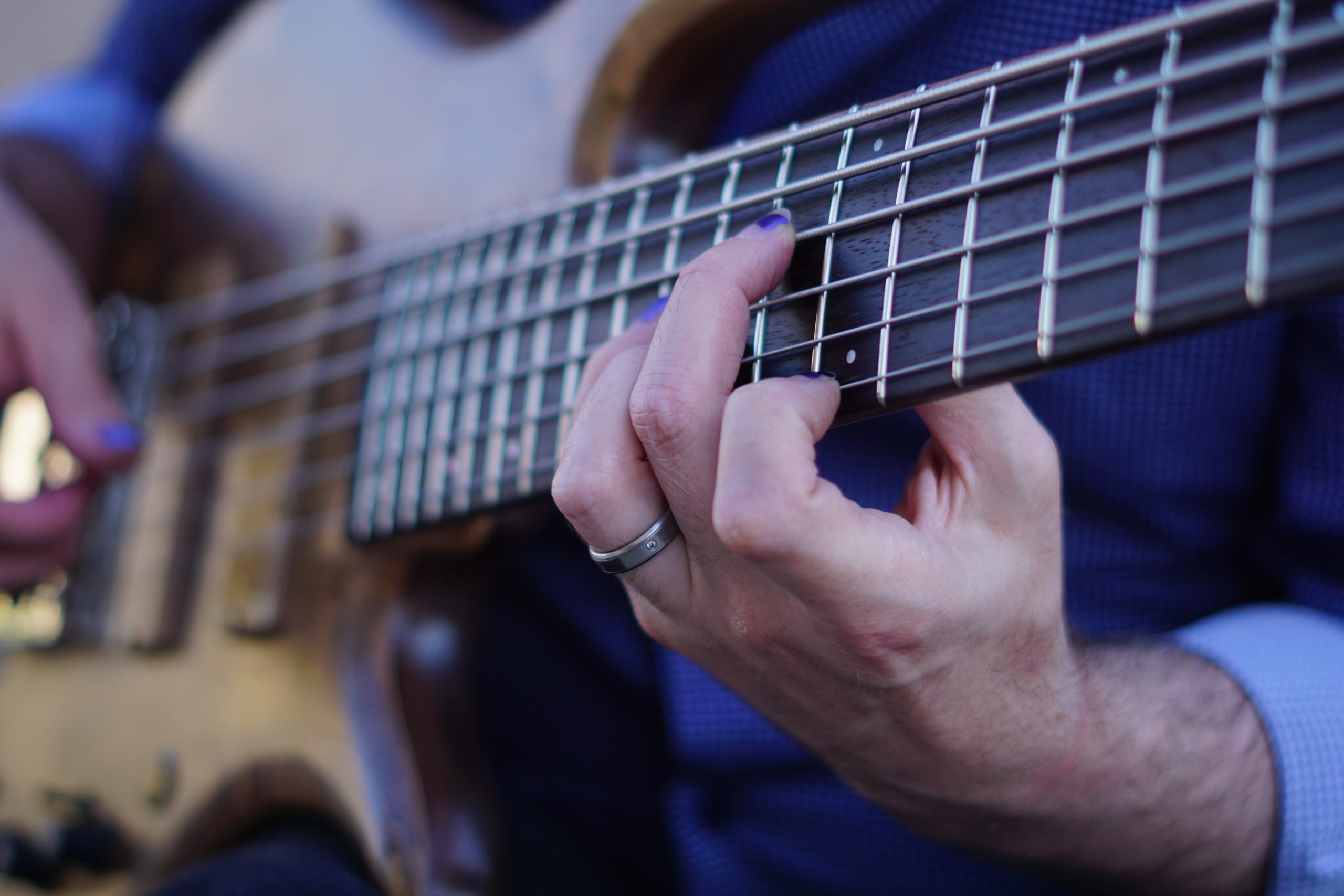
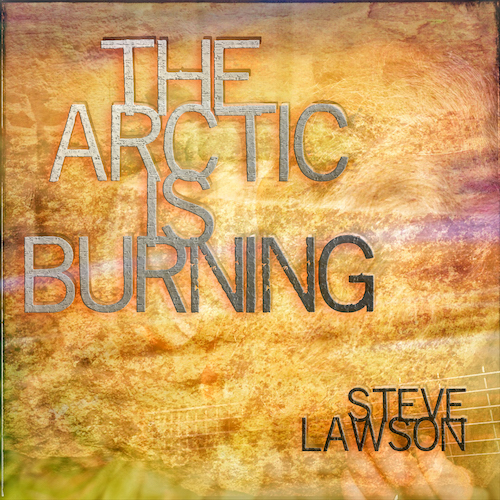 “It’d be tough to demonstrate in a concrete way how the theme and the music are linked, if someone was being cynical about the presence of a narrative,†explains Lawson, “but improv is always about something, even if you’re just responding to the things you’ve been recently practicing and how they sit in relation to other music that you consider meaningful. For some people, those ways of relating are technical or genre-specific, but for me the desire is – at least until the technical side falls apart – emotional. I want to make music that makes me feel the way the artists who move me make me feel.†He continues, “I want the brokenness of The Blue Nile or Talk Talk, the sense of place of Bill Frisell, the honesty of Joni Mitchell, the anger of Bruce Cockburn, the wilful naivety of The Minutemen, the pristine poetry of Jonatha Brooke, whose music is such a natural and flowing extension of whatever she’s singing about…â€
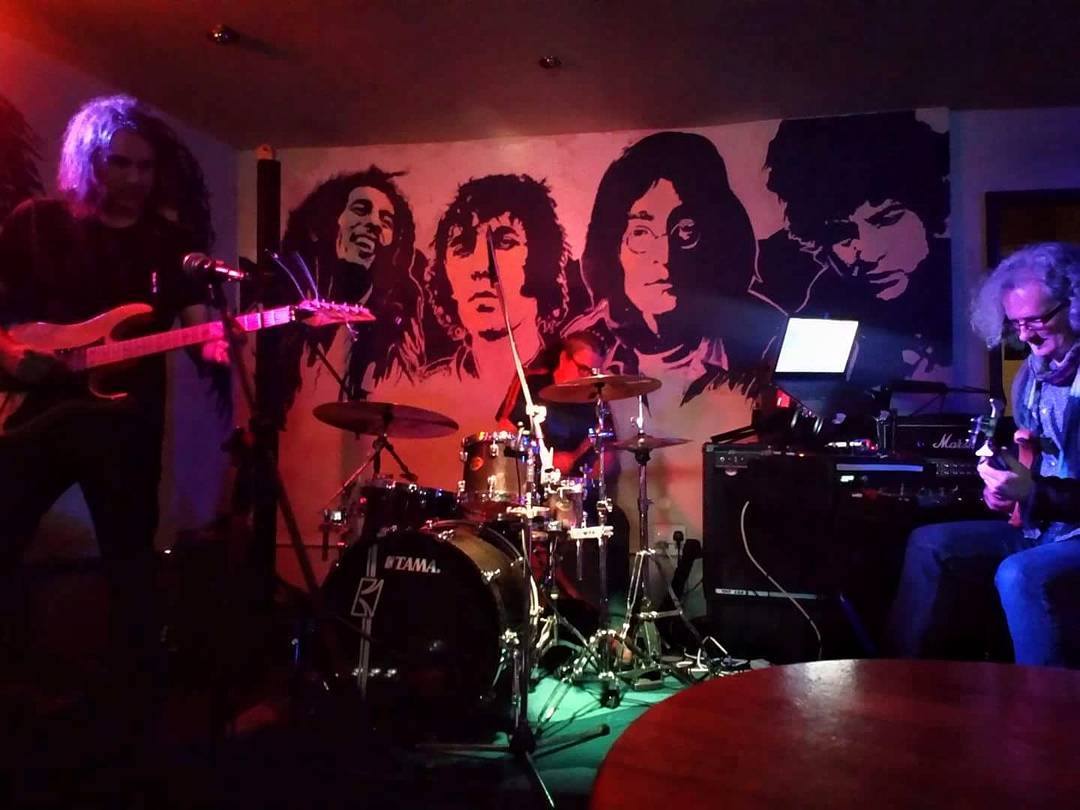
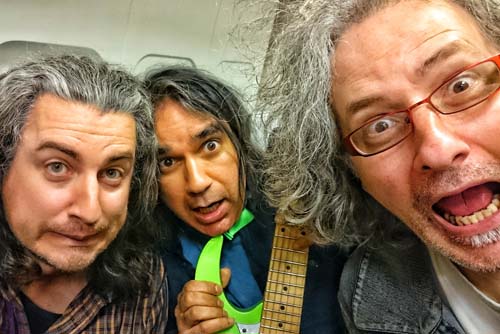
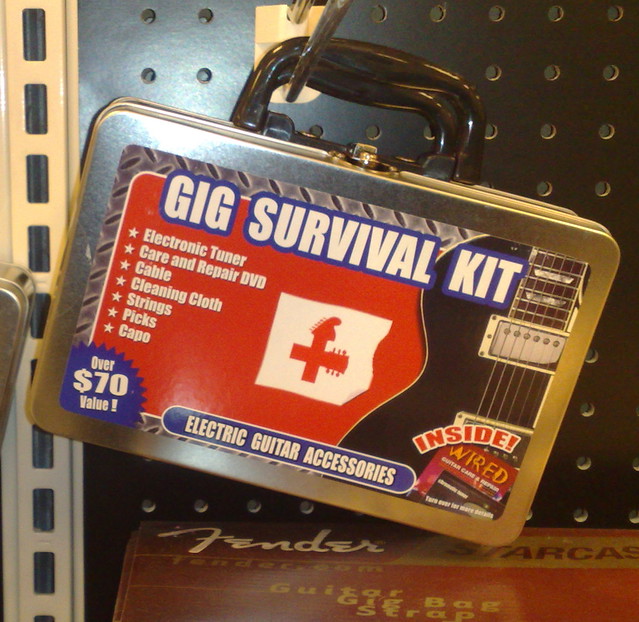
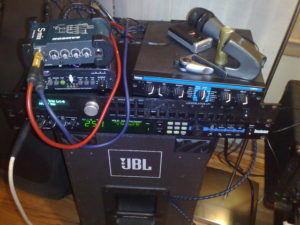 My current studio/live set-up (they’re the same) is the process of 26 YEARS of upgrades. In fact, I started 32 years ago with a borrowed distortion pedal, worked out what I could do with that, and moved on from there. My first album was recorded on Minidisc with an external mic – because THAT’S WHAT I HAD. I could’ve complained and waited til I could afford studio time, but the music wasn’t going to wait. I spent HOURS learning how best to position the mic, I sat with my friend Jez while he mastered it in the very first version of ProTools LE, getting him to explain everything he did so I could learn from that. My 2nd solo album was recorded into a trial version of Soundforge (hint – not designed as a recording program, at ALL!) via a Soundblaster gaming card. because THAT’S WHAT I HAD. My looping set-up changed over time, swapping things out, trading them in – I have multiple albums recorded with a broken (only worked in mono) DL4, and later on with a broken (produced intermittent weird digital glitches, and only worked in mono!) Looperlative, because THAT’S WHAT I HAD. I kept the same basses for decades because I didn’t expect new toys to fix problems that only practice could deal with.