Geek marathon and online sales thoughts

So I’ve set myself the task of trying to understand php – for the geekily-challenged amongst you, php is a web programming language, like html or whatever, only apparently designed by an autistic squirrel with ADD, who hides information away, just because he can.

The reason I’m trying to get my head round it is because it’s what the shop part of my website is written in. As you can see (by clicking that link or any of the ones at the top of the page) I’ve managed to at least get it looking like the rest of the site, and still functioning properly. Fortunately all the money stuff is handled off of my site, by paypal or nochex, so my tweaking can’t make it any less secure.

Online sales is such a weird area, when you measure potential audience against actual return. Trying to find what will inspire the people who like what I do but haven’t yet got round to buying anything to put a virtual hand in a paypal-pocket and pick up a CD or a download.

I know so many musicians who now measure their popularity in terms of myspace friends and plays and youtube visits, but neither of those pay the bills – they’re great for exposure, but have to turn into attendance at gigs and cd/download/merch sales or you’re pretty much destined to a life of day jobs. Which isn’t really such a bad thing – lots of people intentionally choose to keep their day job in order to allow them to do the music they really want to do without the stress of making it pay. I, however, am an idealist, and have never had a plan B, workwise – I play, I compose, I teach and I occasionally write for magazines. That’s pretty much it. So finding ways to sell music rather than just having people watch half a video clip on youtube, give it 5/5 call me a ‘loop genius’ and then never listen again, is pretty important.

When I put the Lessons Learned albums up on the shop for £2.50 each, I sold quite a few more of those than I regularly sell of downloads. Not thousands, but enough for it to have been a worthwhile experiment. And lots of new people got to hear the Lessons Learned albums, which are, in any wise person’s estimation, rather wonderful! (if you haven’t got them, do go and get them)

The received wisdom on websales is that the more clicks they require, the more people will give up half way along. That’s certainly born out by my webstats, which show a huge number of people visiting the shop, but relatively few actually clicking the requisite number of buttons to buy anything.

So what to do? Add paypal buttons to the front page? just put a note on the site saying ‘hey, send me £7 for any one CD, or £20 for three, and I’ll ship ’em out to you’…? Which, BTW, you can do – paypal the money to steve@steve-lawson.co.uk :o) – the beauty of the shop is that it handles downloads – someone needs to write a downloads for musicians software thingie, that just manages collecting the money from paypal and sending a password protected link to the customer. There are a few bits of software that do it, but by and large, they’s ugly!

So, the question is, are you selling on-line? What works? What clearly doesn’t? thoughts and ideas please…

Four gigs coming up in the London area…

After a bit of a barren time gig-wise, I’ve got four London shows coming up – a couple more half hour sets at the Freedom of Expression nights in Croydon and Marylebone, a return gig at a church event in West London called The Waiting, and the much later on in the month, the Recycle Collective is back at Darbucka, this time featuring the genius talents of Patrick Wood and Roy Dodds.

Patrick’s done lots of Recycle gigs before, and always brings a whole load of beauty, funkiness and melodic magic to the gigs. His playing at this year’s Greenbelt Recycle gig was some of the finest Rhodes playing I’ve ever witnessed, especially in an improv setting. So I’m really looking forward to that!

Roy is an amazing drummer that I first heard playing in Estelle Kokot’s trio, then played with him in John Lester’s band at the 606, and recently heard him playing with Theo Travis’ new project Doubletalk at the Vortex. But I’ve been listening to him play for 20 years, as he was the drummer in Fairground Attraction, and has played with Eddi Reader ever since. I’ve found over the years with the RC that the musicians who are primarily ‘song’ players tend to improvise the most coherently; players who are as happy supporting what’s going on as they are leading. and both Patrick and Roy have that quality by the bucket-load. They’re both fantastic versatile musicians, and I’m really excited about it…

So for more details see the gigs page on my website, or the event page at last.fm, or the event page on facebook.

Revisiting an old favourite

Something in a conversation here reminded me of the black metal dialogues – an hilarious email correspondence between a guy pretending to be the 19 year old “king of black metal” from Gary, Indiana (home of the Jackson Five, now clearly demoted to second-most important music export from Gary…) and a a very real owner of a black metal label in Norway. It’s genius stuff, and I’ve just spent the last 20 minutes reading it all again…

enjoy.

This looks interesting

The forthcoming POD X3 from Line 6 looks to be the first Line 6 product since the DL4 that’s got almost everything it should have… Mic preamp modeling in a guitar processor? sounds like lots o’ fun to me.

Now if only I could find a picture of the routing for it – the ones on the website don’t show the connections in and out… and I wish they’d do a 1U rack mount, but I guess in the tradition of the other Pod rackmounts, this’ll be 2U, which makes it too big to fly with – when is someone going to do a range of really powerful tiny processors for musicians who travel by train or plane? One of the best things about the Looperlative is that it’s a small 1U rack mount box that weighs very little and comes with a power supply that’s as light as phone charger.

Still the X3 will definitely be worth investigating…

[ further investigation found this site which suggests that the classic POD Bean-shaped version won’t have a MIDI connector, or the external FX loop, or the XLR outs… I hope those are just unconfirmed rumours, and Line6 get all the features into a tiny box – some of us have to fly to gigs occasionally! ]

It was 30 years ago today…

…actually, it was 30 years ago in February, but for some reason, someone over on the guardian music blog saw fit today to post a piece in defence of the wonder that is Fleetwood Mac’s Rumours – a pertinent post round here as Lo. thinks it’s a load of old balls, and I love it. Really love it. Dancing-around-on-the-tube-singing-along-even-though-people-think-I’m-a-mentalist love it. It’s an album fueled by extreme tensions within the band, but one possessed of a number of the most gorgeous tender love songs I’ve ever heard (‘You Make Loving Fun’ is in my all time top 20 or so songs).

As the Guardian bloggist says, ’77 is seen as the year of Punk. It was also the year of ‘Bat Out Of Hell’, ‘Saturday Night Fever’ and ‘Rumours’. The biggest bands of the late 70s weren’t the Clash or The Pistols, but the Mac, Queen, ELO, and in the US, the stadium behemoths of Journey, Boston, Foreigner etc… Of course punk was significant, it just didn’t wipe the slate clean in any way at all. It offered an alternative, but thank God it wasn’t the tsunami of disco-crushing, prog-destroying, MOR-trampling destruction that the tainted hindsight of most music journos would have you believe. I’d still rather listen to Chic than the Pistols any day. Sure, I like the Clash, but I’m still not averse to a quick listen through Mr Blue Sky either.

No, the late 70s was no more an artistic monoculture than any other time in music – it was as much about the creative tension-laden folky MOR-ness of the Mac as it was about the New York Dolls rip-off that was the Pistols (I still contest that – aside from The Clash – Americans did punk way way way better than the UK, from The Stooges, and the Dolls through The Minutemen, Blondie and Talking Heads, up to Big Black, Black Flag, Husker Du and on up to Green Day, Rancid and the fake-but-tuneladen pop punk of today.)

So, go and listen to Rumours. With pride. Revel in it, embrace the genius that is the Fleetwood/McVie rhythm section, bask in how Songbird is meant to sound when it’s not being overcooked by Eva Cassidy. Ditto Dreams and The Corrs. And remember that the middle bit out of The Chain is probably the most financially lucrative bit of bass playing in the history of the world, thanks to someone at the BBC’s Formula One production team. Dummmmmmmmm, De-De-Dum De-De-De-De-Dum Dummmmmmmmmmmmm.

Trip Wamsley's blog…

Sometimes bloggers just get on a roll. Sometimes people who blog on myspace get lost in Myspace. Trip Wamsley’s myspace blog is far too entertaining just for myspace. Trip, cross post to a proper blog thing, so more peoples can read your excellent rantings and ravings.

Go and have a read, it’s a wonderful insight into a world where endless creativity and benign insanity meet.

Putting on gigs

I got an email today via last.fm from a lovely chap who saw me play at the Spitz a few weeks ago, and is wanting to bring over a band from Germany, and was looking for some tips on putting on gig. I got on a bit of a roll with the advice, and so thought I’d copy it over here as the ideas are pretty much applicable across the board. And, in reading them, you can see why house concerts are the way to go – minimal overheads, built in marketing network, bespoke venue, and great place to form cool relationships with your audience (assuming that, like me, you find meeting the lovely people who connect with what you do as interesting as playing it to them).

Anyway, here’s the letter…


Putting on gigs is tough, as it’s affected by so many variables. obviously your first thing to add up is how much it’s going to cost in absolute terms – so that includes all travel, accomodation, fees, equipment rental, additional staff needed and venue costs. Obviously, the smaller the band, the more chance you’ve got of keeping those costs down. Anything with a drummer becomes exponentially more complicated, due to the need for a much more complex sound system, and larger stage area in the venue. Travel from mainland Europe to here can be very expensive too, especially if the musicians are bringing instruments – consider the hand baggage and checked baggage limits on the airlines being considered when you’re looking at costs.

Once you’ve looked into that, you need to find a suitable venue. There are some venues that can be had for free – often they are the back room in a pub – but they rarely come with their own PA, and very rarely ever have any kind of built in audience or promotion channel/ticketing mechanism.

As an example, the Recycle Collective is run as cheaply as possible – over time i’ve built up a relationship with the owner of the venue, Darbucka, who now lets me book pretty much whatever I want – at least partly because I have a polite sit-down wine-drinkin’ food-eatin’ audience, who spend way more per head than club-night patrons do. I own a PA that works for what I book (there is one in the venue, I just don’t like it), and I book musicians who are either a) local or b) already on tour. I promise them no guarantee in advance, but split all money equally amongst the performers, minus tangible expenses like congestion charge… For this reason, almost all the musicians I ever book live in London, have their own gear and transport (if someone is getting a taxi each way to the gig, that’s probably going to eat up half of what we’ll make on the gig!)

The alternative is to find a night that already exists and will book them – like the Arctic Circle night that booked Hauschka and Max Richta – while I hadn’t heard of either of them, they clearly have a substantial following that Ben was able to tap into and put on an amazing night, but again, his events have a history and a certain level of ‘regular clientele’ – it’s really tough to put a gig on that makes money without that.

As a bench mark for some of the potential costs involved, 5000 A6 double-sided colour flyers costs about £80-£90 – you might be able to split the cost of that with the band’s record label if you put an ad for their latest album on the other side – you then need to get those distributed, either in bars/clubs/restaurants that have flyers available, or by standing outside targeted gigs, giving them out to people who will hopefully be interested.

Contacting the press is also tricky if you have no pedigree – I’ve finally started getting good write-ups in Time Out after years of them being largely indifferent to what I did, but I think it’s because someone who was already a fan of mine is now handling the jazz listings there.

So who to talk to? Ben Eshmade, for sure. Might also be worth approaching The Vortex in Dalston – they might be interested in helping out. And any other venues where you’ve seen similar gigs – Notting Hill Arts Centre, the Arts Depot, Cargo, The Bill Chill House, possibly the Regal Rooms in Hammersmith…

Bottom line, you can never do too much research, but make sure that you’re not promising something you can’t deliver on – in my head I cut in half the projected audience that anyone says they can bring in if they are putting on a show featuring me – people who like my music always overestimate how interested the general public will be in what I do… They do tend to love it when they get to hear it, but trying to get people out to gigs by people they’ve not heard of before is REALLY difficult.

The first interview I ever did for Bassist magazine…

Long time visitors to the website will know that I used to have a complete archive of everything I ever wrote for the late lamented Bassist Magazine. From the middle of 97 to about 2000, I was one of their main contributors, writing interviews, gear reviews and two columns – the gadget guru and bluffer’s guide to jazz.

Via archive.org I recently found stored versions of all the articles again, so I’ll start reproducing some of them here over the next few weeks. – we’ll start with the first interview I ever did for them, with ‘Ready’ Freddie Washington, who was in London playing at Wembley Stadium with Michael Jackson… this one is of particular note because my dictaphone didn’t work, and I had to write the whole interview from memory – I took it to Freddie at the gig to get him to check that I hadn’t misquoted him. He changed two things – both of which were direct quotes from his bio!

anyway, here it is – enjoy!


If you’ve ever experienced the ‘Ready Freddie groove’, whether live or on one of the hundreds of albums he’s played on, then you’ll understand only too well why Freddie Washington has been a first call session player for nearly 20 years. With a CV that includes many of the biggest names in soul, funk, pop, blues, country and just about any other style that you’d care to mention, Freddie’s credits read like a greatest hits of the ’80s and ’90s. From Lionel Richie to B.B. King, Anita Baker to Whitney Houston, and George Benson to Kenny Rogers, Freddie’s laid down his trademark lines with all of them, spreading the Gospel of Groove whenever he picks up his bass.

Freddie’s latest gig is holding down the bass chair on Michael Jackson’s HIStory tour, and while in the UK, Freddie took time out to present clinics in London and Birmingham, sponsored by SWR and The Bass Centre, and it was before the London show that Bassist caught up with Freddie for a chat.

So, what exactly is the ‘Ready Freddie groove’, then?

“Well, I feel the pulse of the song in half time, which gives it a much more laid back feel. In the clinics I always point out that I have technique, but I’m not a technical player. I focus in on the groove and then work with that rather than against it. Every style of music has to have its groove, whether it’s soul, funk, fusion, pop or whatever, and that’s what I focus on – the groove.”

Freddie’s path to becoming a full fledged ambassador of the groove began when he was in the eighth grade at school, in his home town of Oakland, California.

“I started playing when I was 14, and took bass lessons at school. I played upright in the school big band and orchestra and that’s where I got my classical training and learned to read. When I was in the tenth grade, I attended the U.C. Berkley summer music program for some further training and was practising like mad, day and night.”

How did you make the jump from the summer school to taking up bass professionally?

“About the time that I was finishing school, Herbie Hancock was looking for a bassist to replace Paul Jackson, Herbie had auditioned a lot of players but wasn’t happy with any of them. So he asked James Levi, his drummer, if he could recommend anyone and James said ‘There’s this kid in Oakland I think you should hear.’ I’d known James for years, so I got the call and Herbie liked what he heard and hired me.”

The Hancock gig lasted for several years and Freddie cut three albums with the band before moving to LA to further his session career. That was in the early ’80s just as synth bass was moving onto the scene. Wasn’t it a little worrying for a ‘real’ bass player?

“Not really. I don’t think I ever felt threatened by synth bass, I just learned to work with it. A lot of the sessions had electric doubling the synth line and as my thing has always been the groove and I had worked hard on my timing when I was studying as a kid, I have never had a problem doubling synth lines and taking that programmed feel and making it groove. That’s also where playing 5-string is so necessary. Synth bass goes down to a low Bb so you need the low B to be able to compete. I first got a 5 string right after doing Anita Baker’s ‘Rapture’ and I’ve used it on most of the work I’ve done since.

“With Michael Jackson, It’s a real mix. Sometimes I’m doubling synth lines, sometimes playing synth bass and I even pull out my old Precision for the Motown set. When you’re doubling keyboard bass, you don’t have to just follow the synth line, you can work with it and develop it – that’s one of the things I like to demonstrate at the clinics.”

The Michael Jackson tour must be every session player’s dream. How did that come about?

“I was actually first up for the gig in the late ’80s, so it’s been a possibility for about 10 years. When the call came in this time, I was working with Kenny Loggins, so I think they had a little difficulty getting hold of me. When I eventually got to the phone I was told that Michael’s guitarist, David Williams, who’s been a friend for years, had recommended me, so I went up and met the musical director, and they offered me the gig and gave me the tapes to learn the set. I went home and talked it over with my family, because it’s a long time to be away, but my wife Annette is really supportive so I decided to do it.

“This is my first time out on the road since ’84, and that was only three months with Patrice Rushen, but I’m really enjoying it. I’ve always loved playing live and I see that as being where I get a lot of my new ideas from. If you spend all your time in the studio, you could get sort of stale, but when I’m out playing live, I get inspired and then take a load of fresh ideas into the studio with me.”

What about the clinics?

“This clinic tour is sponsored by SWR and we tried it out in New Zealand and Australia, where it went so well we decided to put them on in Europe as well. So far they’ve been really well received. This is my first clinic tour, but with the profile of Michael’s tour it seemed the right time to do it. I’ve been using SWR gear for over 10 years, both live and in the studio, so I approached them about sponsoring the clinics and they were all for it. I guess when I’m up there at the clinics with a room full of bassists, playing and talking about what I do, that’s really where it’s at for me. I always joke that I haven’t worked in 20 years, I’ve been having fun. I don’t think bass playing will ever be work for me. It gets me excited. I love to do it because it brings me joy. It’s overwhelming. It’s just a great part of my life. And doing the clinics is really the result of 20 years of having fun. I’m really grateful to everyone who comes out to the clinics and I like to stay around and talk afterwards.”

Indeed he does. Freddie was signing autographs and chatting to people for 45 minutes after the clinic at London’s Bass Centre, giving his time and full attention to everyone that came to say hello. The clinic itself was largely a question and answer session, with Freddie fielding questions on every area of his career, from the highly appreciative audience. Freddie also demonstrated a few tunes including Patrice Rushen’s huge hit Forget-Me-Nots, which he co-wrote and is currently being giving a fresh airing as the title track to the Will Smith film, Men In Black. The movie version features Smith’s reworked lyrics but still uses the original rhythm track, which showcases Freddie’s patented groove-tastic slap ‘n’ pop workout.

Freddie also demonstrated Smooth Criminal from the current Jacko show, slapping the sixteenth note line in unison with the synth with such precision that you’d have thought he was tracking himself with a MIDI pickup – if there had been a single effect in sight. If anyone was under any illusion that this man is a one-trick slap monster, that was put to rest with his unaccompanied demonstration of the ‘Ready Freddie Groove’ that had everyone tapping their feet and swaying despite the absence of a drummer.

So which drummers have best tuned into the ‘Ready Freddie groove’?

” That’s a hard one as I’ve played with so many great drummers. I think one of my favourites would have to be Steve Gadd. When we get together it’s like a machine. We play like one big unit, just locked into the groove. I also love to play with Ricky Lawson and Bernard Purdie. And Jeff Porcaro was one of the all-time great groove players.”

In the early years, was it ever intimidating going into the studio with these legendary drummers?

” I don’t think I ever felt intimidated by them. I mean, I knew they were great players but also that we were both there to do a job and I had the confidence to get in and do it. My attitude has always been to be totally into whatever it is that I’m playing at the time. If I’m doing a country session, I want to sound like I was born to play country. And if I’m playing blues, I want you to think that that’s all I know how to play. I just did a blues album with Bozz Scaggs, and blues is such a gut level thing that it’s all about feel. That’s why I love blues so much; it’s a total feel thing.”

After the HIStory tour, what next?

” When I get off this tour in September, I would like to do my own record. I have a studio at home and I’d like to start doing some more writing for the solo album. I’ve been wanting to do this for some time, after having written for other people, like Forget-Me-Nots for Patrice, and Someone For Me which was on Whitney Houston’s first album.”

With Freddie having been on tour for so long, Bassist wondered whether or not the calls for session work dry up . At this point Annette, Freddie’s wife, interjects.

“Even when Freddie’s away, the ‘phone never stops ringing. Mostly they want to know when he’s going to be back so they can book him for then. Freddie gets booked because he can play whatever is asked of him but also because he’s good to have around, and that counts for a lot.”

“That’s right,” Freddie adds. “For any gig you need to have all the skills to do whatever’s asked of you. That’s why it’s important to learn to read and to play by ear, and also to develop your sound so that when you play, it’s you that they hear – that what’s inside of you comes out in what you play.”

Which players influenced your sound when you were starting?

“When I was growing up, there was Motown, with all the James Jamerson lines, though no-one knew who he was back then, and there were all the James Brown bassists, as well as Larry Graham with Sly Stone and Graham Central Station. I used to play along with a lot of their records. Larry was a big influence. When he started doing all the popping it was like, whoah! I recently bought some of the Graham Central Station CD reissues in Japan and hearing them again now after more than twenty years, his playing still sounds amazing! Willie Weeks was another big influence, his playing with Donnie Hathaway was awesome. And Chuck Rainey, he could be so busy but under it all there was this huge groove holding it all together. I knew Paul Jackson, who was in Herbie Hancock’s band before me, when I was growing up. I had his old amp in my loft to practice through, and knowing him meant that there was no sense of being overawed by taking his place in Herbie’s band.

“All the great players have their own voice on the instrument. Here in Britain you have Pino Paladino, who I met while doing Michael McDonald’s ‘Blink of An Eye’ album. He’s a brilliant player and has his own sound, you immediately know it’s Pino on a track. I met Jaco Pastorius around ’79-’80, and he was really cool. He showed me a thing or two, and I really liked his style but I never tried to copy him. His sound was him and as I said, I’ve always had my own sound, from really early on as a player. If you compare my sound now with when I was with Herbie there will be some differences because the technology has changed but the essential sound is still the same because it’s in my hands.”

On stage Freddie is the consummate professional; offstage he’s friendly, approachable and obviously totally loves his job and is a delight to meet. For those who were at the clinic, it was a night to remember, and for those who weren’t, one to regret.

‘ Thanks to Nick and Martin at the Bass Centre for setting up the interview.

The HIStory Show.

The British leg of the Michael Jackson tour was four dates long, with one show in Sheffield and an astounding three nights at Wembley arena. Bassist went to the final Wembley show and witnessed Freddie demonstrating the kind of professionalism and versatility that he had talked about at the clinic. Being the HIStory tour, the set included material from every stage of Michael’s career, from I Want You Back up to Blood On The Dancefloor, including plenty of tunes from ‘Thriller’ and ‘Bad’. Freddie played his Ken Smith 5-string for the lion’s share of the material, but switched to a Precision for the Motown set and played synth bass on Thriller, Billy Jean and Blood On The Dancefloor, Freddie’s bass, along with Jonathan Moffett’s bass drum, shook the whole stadium especially on the bass-heavy Earth Song and slap-happy Smooth Criminal. It’s just a shame that the huge venue meant the band was barely visible at the back of the stage and even Michael was just a manic dot on the horizon. Most of the evening was spent watching the not-so-giant screens, which focused on Michael and the dancers, so clear views of Freddie were few and far between.

Though a tad tasteless at times (Michael refusing to move from in front of a tank? Do me a favour!) the whole show was spectacular, for those of us tall enough to see it. The vertically challenged members of the audience had to make do with seeing the top third of the video screens with brief glimpses of Michael when he swung over the crowd on a crane.
ongoing blog tweaks…

Never having been one to leave well enough alone, the blog-tweaks are ever moving forward – this week i’ve added tag listings to the end of each entry (NB, if you click on a tag, you’ll get a list of other articles that feature that tag, and can even subscribe to an RSS feed for posts that just feature that tag… how cool is that?)

And today, i’ve added a list of ‘most recent comments’ to the side bar on the main page – feel free to join the discussion about any particular post!

Todd Reynolds' EP…

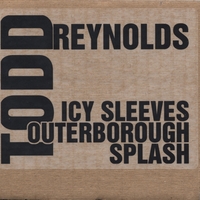
Those of you who saw Todd Reynolds play at the Recycle Collective last year already know what a genius he is, but for those of you who don’t, you owe it to yourselves to head over to the CDbaby page for his new EP and have a listen to the previews – layer upon layer of beautiful violin playing, looped and processed into a gorgeous soundtrack, bearing the influence of both his many years in Steve Reich’s ensemble and his time with Bang On A Can.

More recently, Todd’s been touring with the cooler-than-cool The Books, both opening the shows on his own, and playing with them in their set. He’s all set to become huge, and you’ve got the chance to get his EP now ($6 – that’s £3, for 3 really great tracks, which are a lot longer than your average pop single too) – go over to the CDbaby page, have a listen, but it, then come back and thank me… :o)

© 2008 Steve Lawson and developed by Pretentia. | login

Top